
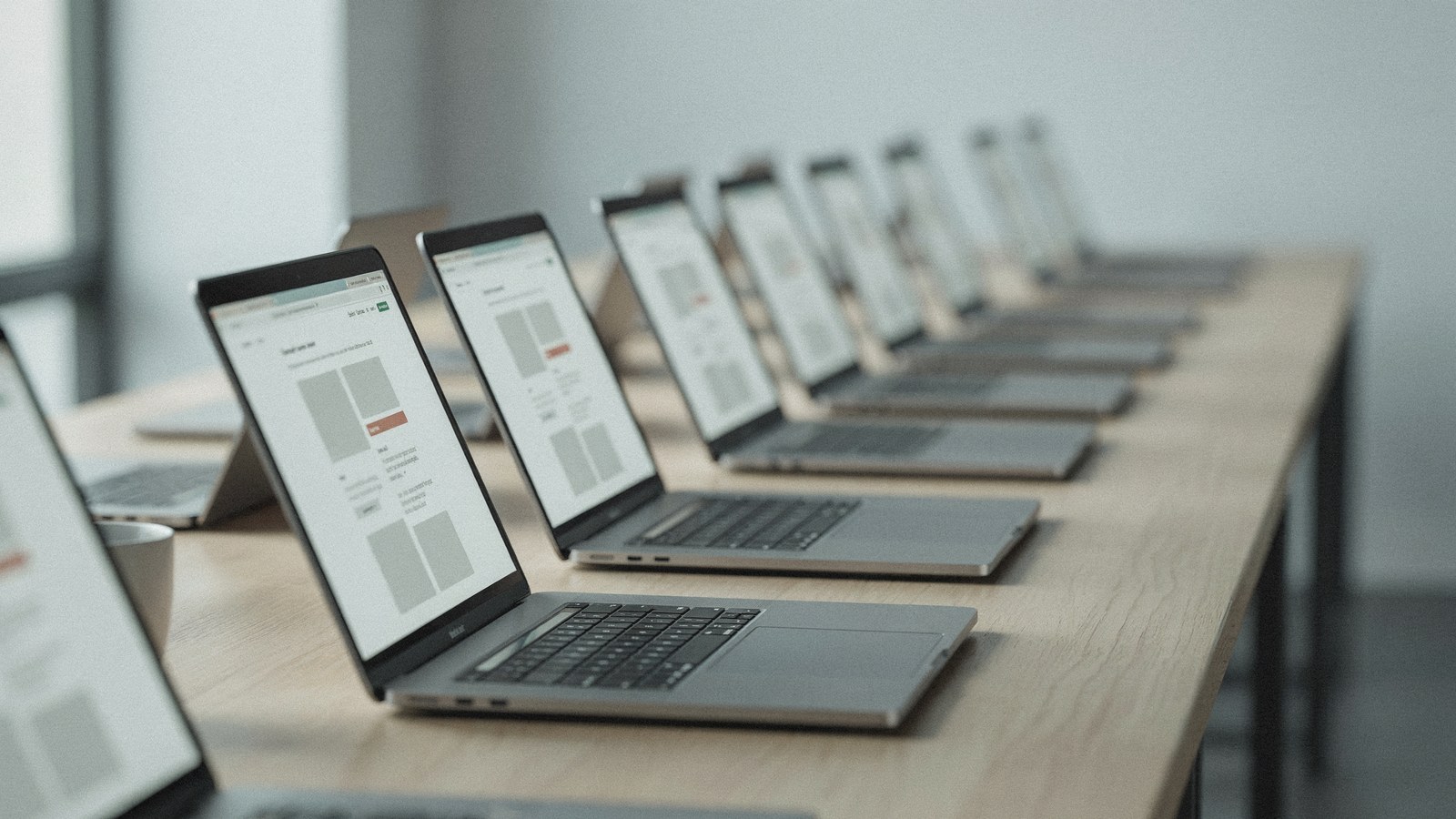
- AI website builders pull from the same small library of layouts, so business sites have started looking nearly identical. Designers call it "the great flattening."
- When your site looks like everyone else's, customers can't tell you apart, so they fall back on the one thing that's easy to compare: price.
- The parts that make a site unmistakably yours (positioning, real photos, voice, the strategic choices) are exactly the parts AI can't do for you.
- You don't have to choose between fast and distinctive. The tools can build the frame; a professional makes it yours.
Something strange happened to the internet this year. AI website builders got so good that almost anyone can launch a clean-looking site in ten minutes, for next to nothing. That sounds like great news for small businesses, and in one way, it is.
But look closely at those sites and you'll notice something. They all look the same. The same soft gradients, the same handful of trendy fonts, the same four-cards-in-a-row layout, the same smiling stock photos. Designers have started calling it "the great flattening," and it is quietly turning millions of small business websites into background noise.
Why Every AI Website Looks Like a Sibling
It is not a coincidence, and it is not your fault. AI website tools are built to play it safe. They reach for the most common layout, the most popular font, the pattern that appears thousands of times in their training data. Safe means average. And when everyone's tool reaches for the same "safe" answer, everyone ends up with more or less the same website.
Think of it like walking into a room where every single person is wearing the exact same outfit. Nobody looks bad. But nobody stands out either, and standing out is the entire reason you have a website in the first place.
When your website could belong to any business in your industry, it belongs to none of them. You stop being a brand and start being a commodity.
What "Looking Like Everyone Else" Actually Costs You
Here is the part that reaches your bottom line. When a potential customer can't tell your business apart from the next three they clicked, they fall back on the only thing that's easy to compare: price. You get pushed into a race to the bottom you never agreed to enter, competing on cost against people you're actually better than.
A website that looks generic also feels generic. It quietly signals "we did the bare minimum," which is the last impression you want a first-time visitor to have. And it makes you forgettable. In a sea of near-identical sites, the visitor who can't remember which one you were is a visitor who calls someone else. Forgettable is expensive.
A lookalike website doesn't lose you customers in an obvious way. It just slowly moves every conversation to price, strips out the reasons someone would choose you over a cheaper option, and makes you easy to forget. You feel it as thinner margins and "we went with someone less expensive," not as a design problem. But that is exactly what it is.
The Parts AI Can't Do For You
AI is genuinely good at the frame: a tidy layout, a fast page, clean code. What it cannot do is the part that makes the site yours. It doesn't know why your customers actually pick you over the competition. It can't take real photographs of your real work, your real team, your real space. It doesn't have your voice, your story, or the judgment to break the "safe" pattern on purpose in the one place that will make someone stop scrolling and pay attention.
Those choices aren't decoration. They are the entire difference between a site that looks like your competitor's and a site that could only belong to you. And they are the specific things a professional is for.
An AI site that's "good enough" feels like a smart shortcut. But "good enough" and "looks like everyone else" are usually the same website. Every time you accept the default, you are quietly deciding to blend in, in a market where blending in is the thing that costs you the sale.
You Don't Have to Choose Between Fast and Distinctive
Here's the good news. The answer isn't to reject the new tools. A good designer uses them too, because the frame can go up fast. The difference is what happens next: the positioning that makes your offer instantly clear, the real photography, the voice that sounds like you, the deliberate choices that make a visitor think "these people are different," and the small strategic touches that turn a browser into a booked call.
You get the speed of modern tools and a site that is unmistakably yours. In a year when almost everyone else settled for the default, that combination is a bigger advantage than it has been in a long time.
The web didn't get worse in 2026. It got more crowded with sameness, which means the businesses that still look and sound like themselves stand out more than ever. Being recognizably you is no longer a nice-to-have. It's the cheapest, most durable advantage you have, and it's the one thing you can't download. If your website could belong to anyone, let's make it unmistakably yours.